
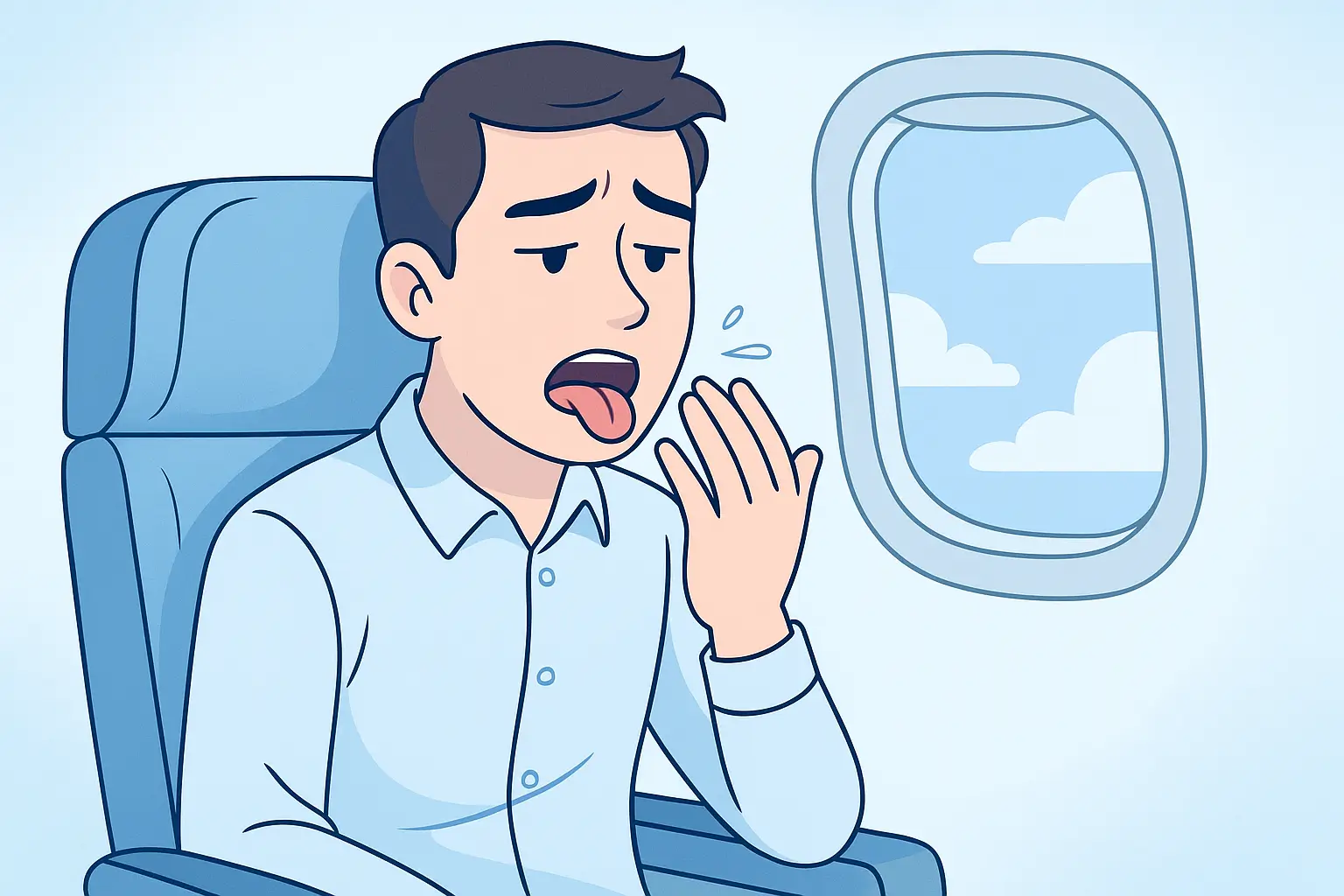
How to Manage Dry Mouth on a Plane
A clear, practical guide to staying comfortable in the air — even when your mouth feels dry
Flying puts your body in an environment it isn’t used to. The cabin air is extremely dry, usually under 20% humidity, which can quickly pull moisture from your mouth and throat. If you’re already prone to dry mouth, traveling can make it worse — leaving you feeling uncomfortable, thirsty, or unable to speak clearly.
This long-form guide walks you through everything you need to know about managing dry mouth on a plane. It’s detailed, practical, and written for real travelers who want real solutions.
Why Dry Mouth Gets Worse on Airplanes
A dry mouth during a flight isn’t “just in your head.” Several physical factors make it much more likely:
1. Low cabin humidity
Airplane cabins are pressurized and rely on outside air at high altitudes, which holds almost no moisture. This dry environment evaporates saliva faster than usual.
2. Mouth breathing during flights
Many people unintentionally breathe through the mouth while flying, especially when sleeping upright. Mouth breathing accelerates dryness in minutes.
3. Dehydration from travel habits
Flying often comes with:
- Coffee before boarding
- Alcohol during the flight
- Not drinking enough water
- Eating salty snacks
Each of these reduces saliva production.
4. Anxiety or stress
Travel nerves or rushing through airports can tighten your throat and reduce saliva flow.
Understanding the “why” helps you target the solution. Fortunately, dry mouth on airplanes is very manageable with a few smart strategies.
How to Manage Dry Mouth Before Your Flight
Preparing ahead of time can dramatically reduce dryness once you’re in the air.
1. Hydrate early — not just on the plane
Drinking water during a flight helps, but hydrating in the hours leading up to takeoff is even more effective. Sip steadily rather than drinking large amounts at once.
If you normally struggle with hydration, start earlier in the day with small, consistent sips.
2. Avoid dehydrating drinks
A simple swap can make a big difference:
- Skip: coffee, energy drinks, alcohol
- Choose instead: water, electrolyte drinks, herbal tea
Caffeine and alcohol both have drying effects, so keeping them low before a flight helps protect your mouth.
3. Use a saliva-supporting product before boarding
Moisturizing mouth sprays, xylitol lozenges, or saliva-boosting gels can coat the mouth so it stays hydrated longer. Starting before you board creates a protective buffer.
4. Bring your own dry-mouth kit
A small travel pouch can include:
- Sugar-free gum
- Xylitol lozenges
- Hydrating mouth spray
- Lip balm (dry lips worsen the sensation of dryness)
- A refillable water bottle (empty for security, refill after)
When these tools are easily reachable, you’ll use them more consistently.
How to Reduce Dry Mouth During the Flight
Here’s where small habits make the biggest difference.
1. Sip water throughout the flight
Aim for a few sips every 15–20 minutes rather than big gulps once in a while. This keeps the mouth continuously moist.
If the cabin crew is slow coming around, don’t hesitate to ask for extra water. It’s completely normal and they’re used to it.
2. Choose the right snacks
Airplane snacks tend to be salty and drying (like pretzels or crackers). Instead, try:
- Fresh fruit (if allowed onboard)
- Soft snacks like yogurt or applesauce
- Nuts (in moderation)
Moist foods help keep the mouth comfortable, while salty foods make dryness worse.
3. Use sugar-free gum or lozenges
Chewing gum or letting a lozenge dissolve encourages saliva flow. Choose sugar-free options to avoid tooth issues during long flights.
Xylitol-based products can be especially helpful, as xylitol supports moisture and oral health.
4. Try a dry-mouth moisturizing spray
Mouth sprays are one of the most effective in-flight tools. They moisturize the mouth, coat the tissues, and relieve that sticky sensation almost instantly. Many last for 1–2 hours.
A quick spray after meals or naps can prevent the dryness from snowballing.
5. Breathe through your nose
Nasal breathing dramatically reduces moisture loss.
If your nose tends to get stuffy while flying:
- Use a gentle saline nasal spray
- Bring a small pack of tissues
- Avoid nasal decongestants unless prescribed
If you fall asleep easily with your mouth open, consider a soft neck pillow that helps keep your head upright and reduces mouth opening during sleep.
6. Avoid alcohol in the air
While a glass of wine might feel relaxing, alcohol dries the mouth even faster in low-humidity air. If dryness is a major issue, skip alcohol altogether on the plane.
7. Limit overly hot drinks
Hot drinks can evaporate moisture from the mouth more quickly. Warm beverages are fine — just avoid very hot coffee or tea.
How to Sleep on a Plane Without Getting a Dry Mouth
Sleep is when dry mouth hits its worst peak. Here’s how to protect yourself:
1. Drink water before you close your eyes
Moisturizing your mouth beforehand gives you a head start.
2. Use a moisturizing gel or spray
These thicker formulas last longer than simple sips of water and can reduce dryness during sleep.
3. Support your jaw and head
A neck pillow helps keep your mouth closed naturally. When your jaw drops open, dryness can happen fast.
4. Keep a lozenge ready
If you wake up mid-flight feeling dry, you can refresh your mouth without getting up.
What to Do After Landing
Dry mouth can linger after the flight, especially after long-hauls. A few quick habits help your mouth recover.
1. Drink a full glass of water
This helps rebalance fluids and kick-start saliva production.
2. Brush and moisturize
A gentle brush followed by a hydrating spray or rinse can soothe the mouth and freshen breath.
3. Avoid immediate caffeine
Your body needs time to rehydrate. Give yourself at least an hour before ordering coffee.
4. If dryness persists, pay attention
If you regularly experience dry mouth outside of flying, you may want to discuss it with a healthcare professional. Persistent dry mouth can be related to medications, mouth breathing, allergies, or underlying conditions.
Special Tips for People With Chronic Dry Mouth
If you already live with dry mouth due to medication, aging, autoimmune conditions, or nighttime mouth breathing, flying can feel extra challenging. These traveler-specific steps help:
1. Bring medical-grade saliva substitutes
These heavier formulations stay in the mouth longer, providing deeper moisture.
2. Avoid strong mint gums or lozenges
Strong mint can irritate a sensitive, dry mouth. Choose gentler flavors like mild mint, fruit, or xylitol-only products.
3. Keep lips moisturized
Dry lips can worsen the sensation of dryness in the mouth. Apply lip balm periodically during the flight.
4. Use a saline nasal spray frequently
This keeps nasal passages moist so you’re less tempted to breathe through your mouth.
What NOT To Do on a Plane if You Have Dry Mouth
A few common habits make dryness much worse:
1. Don’t rely on carbonated drinks
They may taste refreshing, but carbonation can irritate the mouth and throat.
2. Don’t eat only salty snacks
Salt pulls moisture from the mouth tissues.
3. Don’t wait until you feel thirsty
Thirst means dryness has already started.
4. Don’t ignore nasal congestion
It quickly forces you into mouth breathing.
Being mindful of these small behaviors keeps your mouth more comfortable from takeoff to landing.
A Step-by-Step Dry Mouth Plan for Your Next Flight
Here’s a simple, practical routine you can follow.
Before the airport
- Drink water steadily
- Avoid caffeine
- Pack your dry-mouth kit
At the gate
- Use a hydrating mouth spray
- Refill your empty bottle
During the flight
- Take small sips often
- Use gum or lozenges
- Moisturize your mouth after meals
- Keep your lips hydrated
- Use a saline nasal spray before sleeping
After landing
- Drink more water
- Freshen your mouth
- Give yourself time to rehydrate
Following this plan consistently can make flying far more comfortable.
Final Thoughts
Dry mouth on a plane is common, but it doesn’t have to ruin your travel experience. With a little preparation and a few strategic habits, you can stay comfortable, hydrated, and relaxed from takeoff to touchdown.
Managing dry mouth is all about protecting moisture, encouraging saliva flow, and avoiding the common triggers that make dryness worse. Once you build these habits, flying becomes much easier — and your mouth feels much better.