
How Nasal Breathing Dramatically Reduces Moisture Loss and Dry Mouth
Dry mouth — or xerostomia — can make everyday life uncomfortable. It affects how you talk, eat, and even sleep. Many people don’t realize that one of the simplest, most natural ways to reduce mouth dryness doesn’t come from a bottle or a lozenge — it comes from how you breathe.
Switching from mouth breathing to nasal breathing can dramatically reduce moisture loss, improve saliva balance, and help prevent the constant dryness that makes your mouth feel parched. Let’s explore why.
Why Mouth Breathing Causes Dry Mouth
When you breathe through your mouth, the air passing over your tongue, gums, and throat evaporates saliva. This constant airflow dries out the soft tissues and reduces the mouth’s natural lubrication.
Saliva isn’t just about comfort — it protects your teeth, neutralizes acids, and helps digestion. When saliva levels drop, you may experience:
- Cracked lips and burning sensations
- Difficulty swallowing or speaking
- Bad breath
- Tooth decay or gum problems
Mouth breathing turns this problem into a daily cycle — dry air in, moisture out.
It’s not only about daytime breathing, either. Nighttime mouth breathing, especially during sleep, is one of the biggest triggers of morning dry mouth and dehydration.
How Nasal Breathing Protects Moisture and Saliva Balance
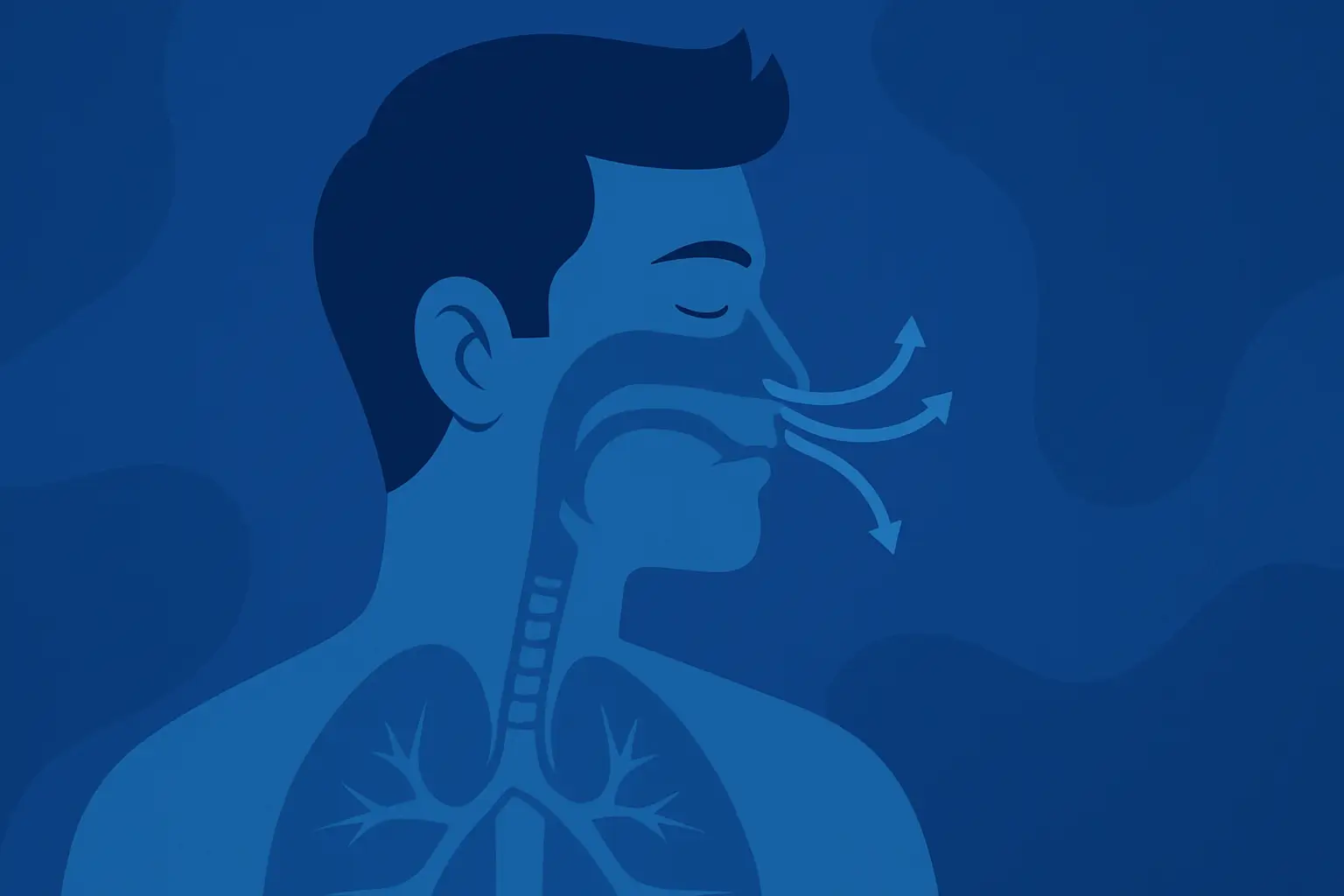
The human nose is designed as a natural humidifier. When you inhale through your nose:
- The nasal passages warm and moisten the incoming air.
- The sinuses filter and regulate humidity levels.
- The air entering your lungs is more hydrated and gentle, minimizing evaporation from mouth tissues.
This simple difference — air entering through the nose rather than the mouth — dramatically changes how much moisture your body loses.
1. The Nose Conserves Humidity
Your nose has tiny structures called turbinates, which swirl the air and increase its contact with the moist nasal lining. This process adds water vapor to every breath, preventing your mouth and throat from drying out.
When you exhale, the nose also recaptures some of the moisture from your breath — a recycling mechanism the mouth simply doesn’t have.
2. Nasal Breathing Stimulates Saliva Flow
Breathing through the nose keeps your mouth closed, allowing saliva to coat the tissues without constant evaporation. The slight negative pressure created during nasal breathing even encourages steady saliva production.
This is especially beneficial at night, when saliva flow naturally decreases. Keeping the mouth closed helps maintain that thin layer of moisture that prevents a dry, sticky feeling in the morning.
3. Reduced Mouth pH Fluctuations
Mouth breathing can cause your saliva to become more acidic due to reduced flow and exposure to air. Nasal breathing helps maintain a balanced oral pH, creating a healthier environment for your teeth and gums.
4. Better Sleep, Less Dehydration
People who breathe through their mouths at night often wake up with dry lips, sore throats, and dehydration headaches. Nasal breathing promotes deeper sleep and better oxygen exchange, helping you wake up more refreshed and less parched.
The Science Behind Moisture Loss and Breathing
Research has repeatedly shown that nasal breathing conserves body moisture far more effectively than mouth breathing.
One study published in the Journal of Applied Physiology found that mouth breathing increases water loss by up to 42% compared to nasal breathing, even under the same environmental conditions. This happens because air exhaled through the mouth carries more water vapor away from the body.
Another study from the Journal of Oral Rehabilitation found that individuals who habitually breathed through their mouths had significantly lower salivary flow rates and higher rates of oral dryness symptoms than nasal breathers.
Together, these studies confirm what many people experience firsthand: keeping your mouth closed helps preserve saliva and hydration more efficiently than any spray or lozenge alone.
(Sources: Journal of Oral Rehabilitation, 2013)
How to Train Yourself to Breathe Through Your Nose
If you’re used to breathing through your mouth — especially at night — it may take some effort to retrain your habits. But the good news is, it’s absolutely doable.
Here’s a simple step-by-step approach:
1. Start with Awareness
During the day, pay attention to how you breathe. Are your lips parted? Is your mouth dry?
Gently close your mouth and take slow breaths through your nose. The more you notice and correct yourself, the faster your body adapts.
2. Clear Nasal Blockages
If nasal congestion makes breathing through your nose difficult, address it directly.
Try:
- Rinsing with a saline nasal spray
- Using a humidifier to keep air moist
- Avoiding irritants like smoke or strong perfumes
If you have chronic nasal issues, it’s worth discussing with an ENT specialist — sometimes structural problems like a deviated septum can interfere with airflow.
3. Try the “Nasal Breathing Reset” Exercise
Close your mouth gently and inhale through your nose for four seconds.
Hold your breath for one or two seconds, then exhale through your nose for six seconds.
This technique — often used in Buteyko breathing — helps strengthen nasal breathing habits and relax your respiratory muscles.
4. Mouth Taping at Night (Safely)
For many people, the real challenge comes at bedtime. During sleep, the jaw relaxes and the mouth tends to fall open.
A gentle method is mouth taping — placing a small piece of breathable tape vertically across the lips (not fully sealing them). This helps keep your mouth closed and encourages nasal breathing through the night.
Use only products designed for this purpose and never block airflow completely. Always consult your doctor first, especially if you have sleep apnea, nasal obstruction, or breathing difficulties.
5. Maintain Good Oral Hydration
Even with nasal breathing, hydration is key.
- Sip water throughout the day.
- Use alcohol-free mouthwash or xylitol lozenges.
- Avoid caffeine and alcohol close to bedtime.
These habits complement nasal breathing to keep your mouth moist and comfortable.
Long-Term Benefits Beyond Dry Mouth
Nasal breathing doesn’t just keep your mouth moist — it benefits your entire body.
Better Oxygen Absorption
Breathing through your nose increases nitric oxide levels, which helps open blood vessels and improves oxygen uptake in your lungs.
Improved Oral Health
Because saliva stays stable and protective, you reduce your risk of cavities, gum inflammation, and enamel erosion.
Reduced Snoring and Sleep Apnea Risk
Mouth breathing often contributes to snoring and fragmented sleep. Nasal breathing promotes smoother airflow and quieter nights.
Fresher Breath
With more saliva and less bacterial buildup, your breath naturally smells cleaner and fresher.
When to Seek Medical Help
If you’ve tried switching to nasal breathing but still wake up with severe dryness, it might be due to:
- Sleep apnea
- Chronic nasal congestion
- Medications that reduce saliva
- Underlying medical conditions like Sjögren’s syndrome or diabetes
Your dentist or doctor can help pinpoint the cause and recommend additional treatments, such as saliva substitutes or adjusting medications.
Final Thoughts
Nasal breathing may seem simple, but its effects are profound.
By closing your mouth and letting your nose do its job, you can:
- Keep your mouth moist naturally
- Improve saliva flow and oral health
- Sleep more comfortably and wake up refreshed
It’s free, natural, and one of the most powerful habits you can build for lasting relief from dry mouth.